

Nummazaki: Is It Real? The Truth About This “Hidden” Japan Spot
If you have searched for “Nummazaki” recently, you have probably found dozens of travel blogs calling it a “hidden coastal paradise” in Japan. They describe cliffs, pine groves, fishing villages, and Mount Fuji views.
It sounds like the perfect off-the-beaten-path trip. There is just one problem. Nummazaki does not exist as an official place.
No government tourism board lists it. No map marks it. No local business claims it. Yet it keeps showing up in search results, written with total confidence, as if it were a well-known Japanese town.
This article breaks down exactly what is happening, why this matters for travelers, and what real destination you should look up instead if you want the coastal Japan experience these articles promise.
What People Are Claiming About Nummazaki
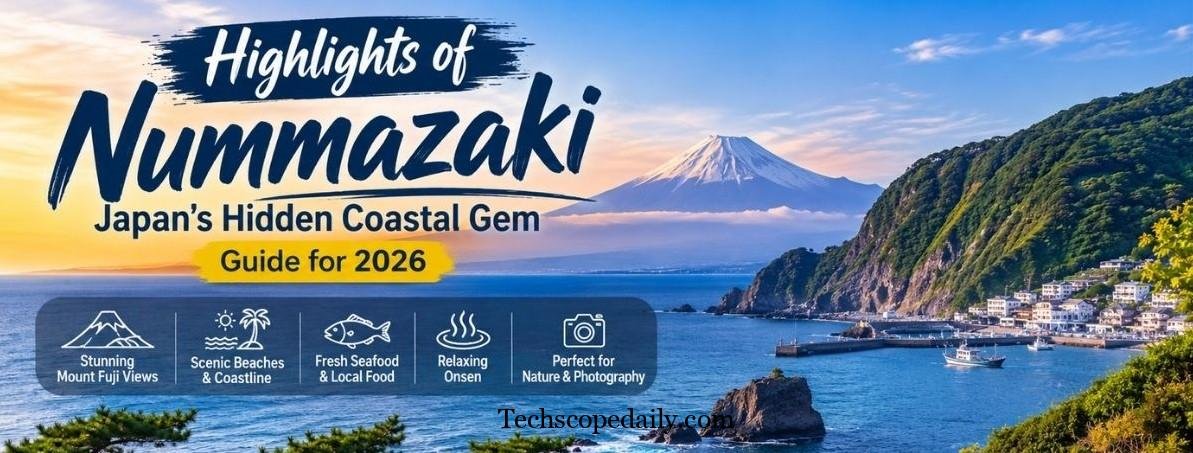
A wave of articles published in 2026 describe Nummazaki as a coastal stretch in Shizuoka Prefecture, close to Numazu City and Suruga Bay. They mention:
- Dramatic clifftop hiking trails
- Traditional fishing villages
- Fresh seafood markets
- Clear views of Mount Fuji across the water
- A “quiet, unpolished” atmosphere compared to Tokyo or Kyoto
Every one of these articles sounds confident. Some even include phrases like “the best places are often the ones not listed on every tourist brochure,” which almost predicts the fact that you will not find Nummazaki anywhere official.
That phrasing is a warning sign, not a selling point.
Why Nummazaki Fails a Basic Fact Check

Here is what a genuine Japanese destination usually has, and what Nummazaki is missing:
- No entry on Wikipedia or Britannica, even though small Japanese towns and neighbourhoods usually get at least a short entry.
- No listing on official Shizuoka Prefecture or Numazu City tourism sites, which document even minor local attractions in detail.
- No train station, bus stop, or address appears in any of the articles. Real destinations always include exact directions.
- No Japanese-language sources. A real Japanese place name would show up in Japanese search results, local news, or municipal records. Nummazaki does not.
- Circular definitions. Several articles literally admit, in different words, that “it isn’t a single town on a map with an official border.” A real place has a border. A marketing concept does not.
When you put these gaps together, the pattern is clear. Nummazaki reads like a name that was generated, then repeated by several websites that copied each other’s structure and style without checking a single primary source.
How a Fake Place Name Spreads Online
This is not the first time an invented term has spread across the internet and started ranking on Google. Here is the general pattern, and it matches what happened with Nummazaki almost exactly:
- An AI tool or writer generates content about a “hidden gem” destination, sometimes based on a misread place name or a made-up composite.
- The article ranks briefly for a low-competition keyword, since almost nobody else is targeting that exact phrase yet.
- Other SEO sites notice the ranking and produce their own “guide” on the same topic, often using AI tools that pull details from the first article.
- Search engines start seeing multiple sources repeating the same claim, which can create a false impression of legitimacy, even though every source traces back to the same unverified origin.
- Real users get misled, because the content sounds professional and detailed, even when it describes nothing that actually exists.
This cycle is exactly why Google’s Helpful Content system and E-E-A-T guidelines exist. They are designed to reward content backed by real experience and verified facts, not confident-sounding text with no primary source behind it.
The Real Location Behind the Claims: Numazu and Suruga Bay
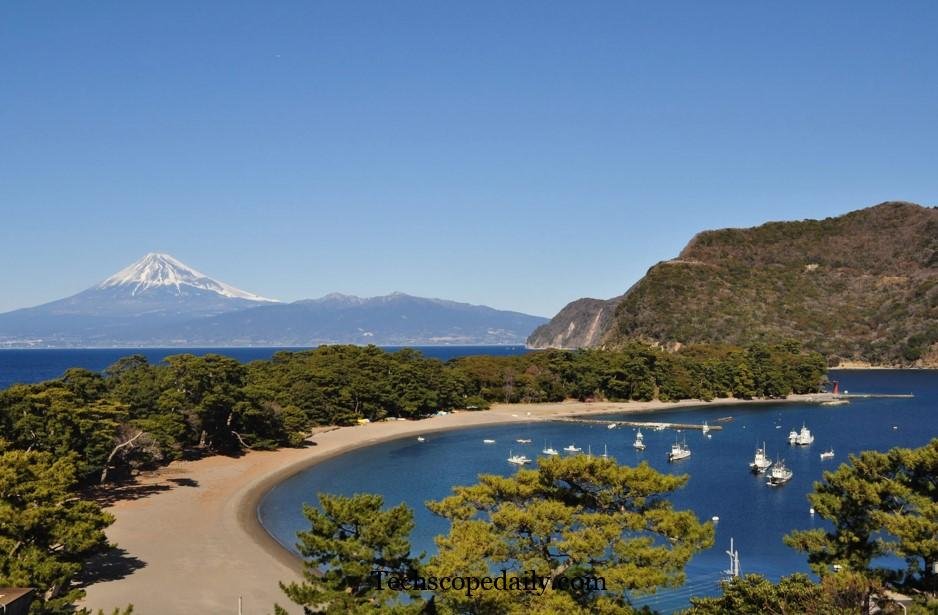
Strip away the invented name, and the geography described in these articles is real. It is just borrowed from Numazu City, a genuine coastal city in Shizuoka Prefecture.
Numazu sits between Mount Fuji and Suruga Bay, at the northwestern gateway to the Izu Peninsula. It has:
- A working fishing port with a well-known seafood market
- Sembon-matsu (Thousand Pines) Beach, famous for its old pine trees
- The Numazu Imperial Villa Memorial Park, built in 1893
- Direct Shinkansen access from Tokyo, reaching Mishima or Numazu in under an hour
- Suruga Bay itself, Japan’s deepest bay at around 2,500 metres, known for sakura shrimp fishing and unusual marine life
Every genuine detail buried inside the “Nummazaki” articles, the cliffs, the fishing culture, the Fuji views, the pine-lined paths, describes this real area. The fabricated name just repackages Numazu’s actual identity under a brand-new label.
Nummazaki vs Numazu: Comparison Table
| Feature | “Nummazaki” (as described online) | Numazu City (real place) |
| Official status | Not listed on any map or government site | Registered city, population approx. 185,000 |
| Wikipedia/Britannica entry | None found | Yes, documented in detail |
| Train access | Never specified | JR and Shinkansen access via Mishima/Numazu stations |
| Local tourism board | None | Explore Shizuoka and Numazu City tourism sites |
| Historical records | None | Dates back to the Nara period, 8th century |
| Named attractions | Vague, no addresses | Sembon-matsu Beach, Numazu Port, Imperial Villa Park |
| Japanese-language sources | None found | Extensive |
| Source of claims | Recycled SEO blog content | Verified travel and government sources |
Pros and Cons of Trusting “Hidden Gem” Travel Content
Pros of these types of articles:
- They are often well-written and easy to read, which makes them enjoyable at first glance.
- They can point you toward a real region, even if the specific name is invented, since they usually borrow real geography.
- They highlight genuine travel themes, like avoiding crowds, that are worth researching further through verified sources.
Cons of these types of articles:
- They can send you searching for a place that does not exist, wasting planning time.
- They erode trust in travel content generally, since readers cannot tell verified guides from generated ones.
- They may cite each other rather than original sources, creating a false sense of confirmation.
- They rarely include practical details like exact addresses, opening hours, or station names, because there are none to give.
How to Spot AI-Generated Travel Guides
Use this quick checklist before trusting any “hidden destination” article:
- Check for a Wikipedia or official tourism board listing. If a place has zero official presence, treat the claim with caution.
- Look for exact directions. Real guides name specific stations, bus numbers, or road names.
- Search the name in the local language. A real Japanese, Korean, or Thai destination will show up in that country’s own search results.
- Watch for circular phrasing. Sentences like “it isn’t officially defined” or “locals call it this” without any named local source are red flags.
- Compare multiple articles’ details. If every article repeats the exact same short list of features with no unique first-hand detail, they likely share one unverified origin.
What to Actually Visit Instead
If the appeal of “Nummazaki” was quiet cliffs, fresh seafood, and Mount Fuji views without the Tokyo crowds, here are real alternatives worth researching:
- Numazu City and Sembon-matsu Beach — the genuine coastal city these articles borrowed from.
- Heda and the western Izu Peninsula coastline — quieter fishing towns south of Numazu with real, documented attractions.
- Miho no Matsubara — a UNESCO-listed pine grove near Shizuoka City with classic Mount Fuji views across Suruga Bay.
- Toi and Matsuzaki — smaller, less touristy Izu Peninsula towns with real hot springs and coastal walking paths.
Each of these has verifiable tourism information, train access details, and a real presence in Japanese travel resources.
Frequently Asked Questions
Is Nummazaki a real place in Japan?
No verified evidence supports this. There is no official government listing, no Wikipedia entry, and no Japanese-language source confirming it as a real location.
Where did the name Nummazaki come from?
It appears to have originated from AI-generated or low-quality SEO content that combined real Suruga Bay geography with an invented name, which other websites then copied.
Is the coastline described in these articles real?
Yes, the geography, cliffs, fishing culture, and Mount Fuji views are real. They describe the genuine Numazu City and Suruga Bay area, just under a fabricated name.
How can I find real hidden gems in Japan instead?
Use official sources like Japan National Tourism Organization, prefectural tourism boards, and Japan Guide, and cross-check any claim against a second independent source before trusting it.
Why do search engines show fake places like this at all?
Search engines rank content based on many signals, including relevance and freshness. When several sites publish similar unverified claims around the same time, it can temporarily create the appearance of legitimacy before quality signals catch up.
Is it dangerous to plan a trip based on this kind of content?
It will not put you in physical danger, but it can waste your planning time and lead to disappointment if you search for a location with no station, address, or map listing.
Are all “hidden gem” travel articles unreliable?
No. Many are written by real travelers with first-hand experience. The key is checking for verifiable details like exact locations, transport information, and independent sources.
What is the real bay mentioned in these articles?
It is Suruga Bay, Japan’s deepest bay at around 2,500 metres, located between Shizuoka City, Numazu, and the Izu Peninsula.
Should website owners avoid publishing content about unverified places?
Yes. Publishing unverified claims as fact can harm a site’s credibility and conflicts with Google’s Helpful Content and E-E-A-T guidelines, which reward accurate, experience-based information.
What should I do if I already read about Nummazaki elsewhere?
Treat it as inspiration to research the real Numazu and Suruga Bay coastline, rather than as a factual travel guide to a specific confirmed destination.
Conclusion
Nummazaki is a good reminder that not everything ranking on Google is true, even when it is written with confidence and detail. The name appears to be a fabricated destination, built from real Suruga Bay geography and repeated across several SEO-driven websites without a single verifiable source behind it.
The good news is that the real place behind these claims, Numazu City and its Suruga Bay coastline, genuinely delivers what the fake articles promised: dramatic cliffs, fresh seafood, quiet fishing villages, and unforgettable Mount Fuji views. You just need to search for it by its real name.
Before booking a trip around any “hidden gem,” take two minutes to check for an official source. It could save you from planning a visit to a place that was never there in the first place.